What is cholesterol
Cholesterol is the term for a group of molecules belonging to the chemical substance class of fats/lipids. There is not just one cholesterol, but several different cholesterols with different tasks and functions.
Cholesterol is very important for our body because it is used as building material for our body cells. Additioinally, various hormones are produced from cholesterol, including the sex hormones oestrogen and testosterone. Cholesterol is essential for our life.
Cholesterol is only partially absorbed through food and only through animal products. We produce most of it ourselves. In fact, ¾ of the cholesterol is produced by our own body. With this, only ¼ of cholesterol is actually absorbed through food.
However, it is not really about the cholesterol itself, but about the packaging. Depending on how the cholesterol molecule is packaged in the body, it is either „good“ or „bad“.
For example, there is the packaging called LDL (low-density lipoprotein) and the packaging called HDL (high-density lipoprotein). It is best to imagine the packaging as a means of transportation, e.g. a bus, because that is also its main task.
The LDL
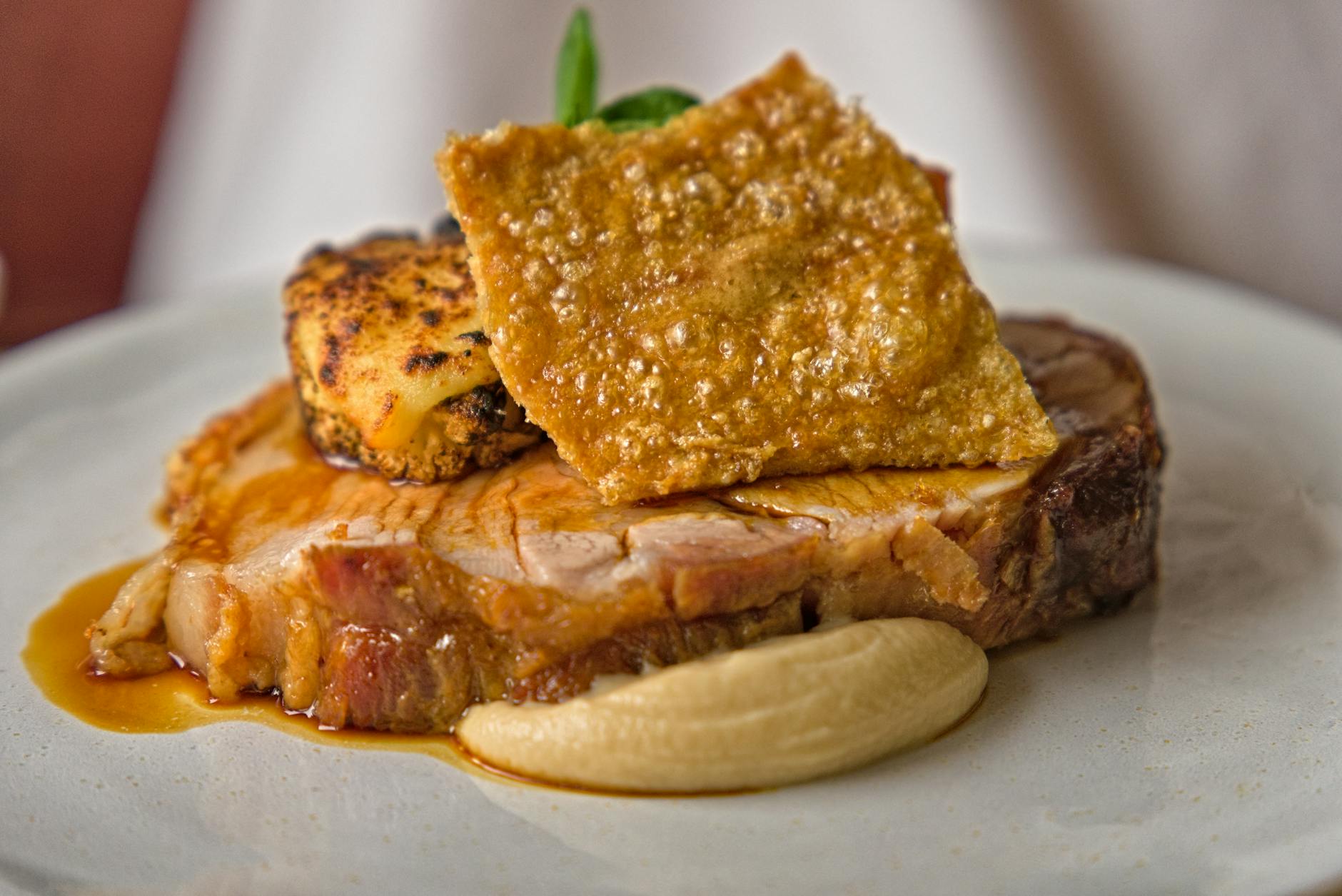
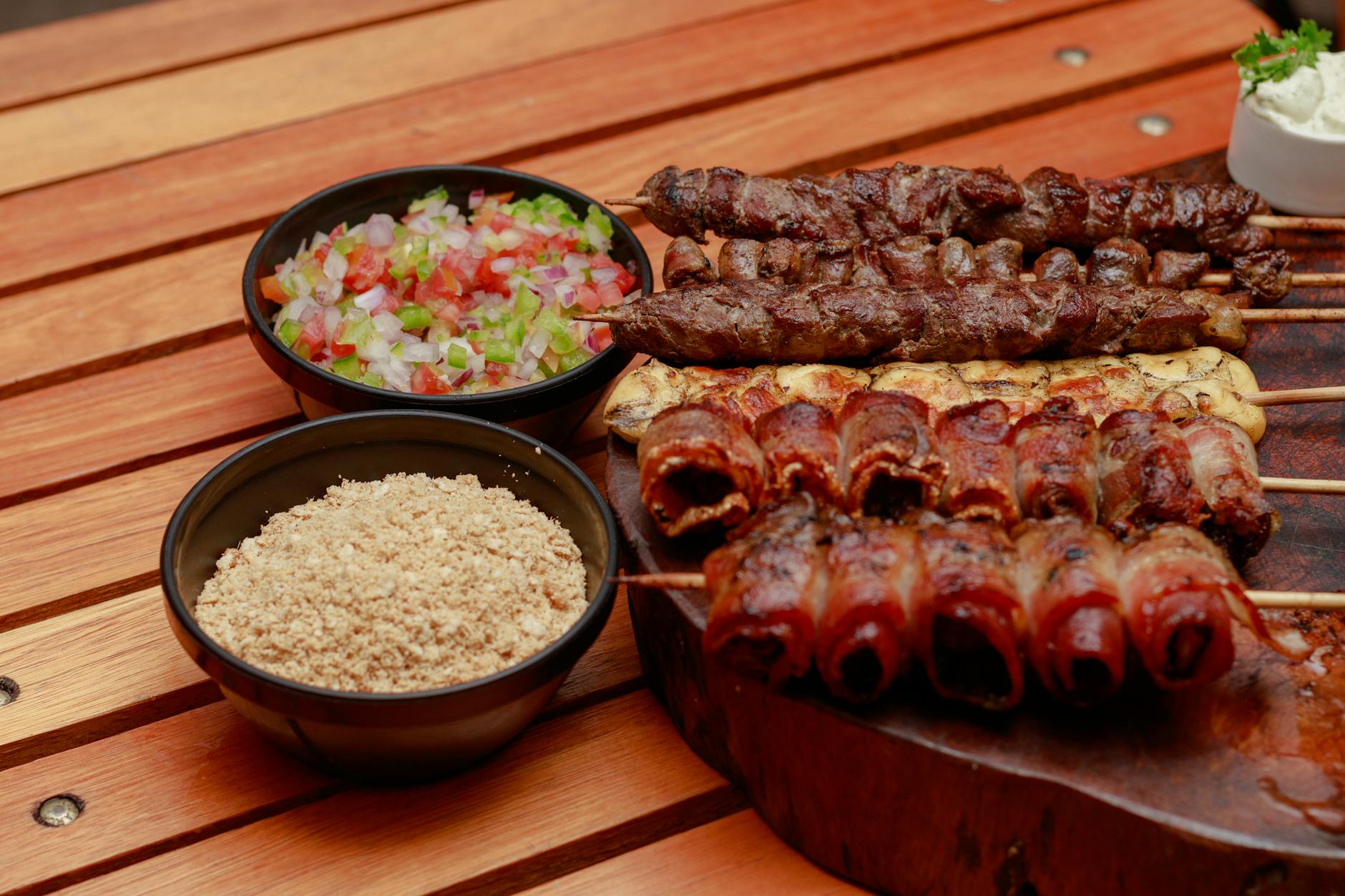
Your liver makes all the cholesterol you need. The remainder of the cholesterol in your body comes from foods from animals. For example, meat, poultry and dairy products all contain cholesterol.

However, the cholesterol from the liver must now be transported to its site of action in the body’s cells. To transport it, we need a means of transportation. This is where LDL comes into play.
LDL is loaded with cholesterol from the liver like a bus and transports it via the bloodstream to the body’s cells.
Let’s call it a regular bus here, because the characteristic of a regular bus is that it always runs according to a timetable and transports regular passengers. The regular passengers are the cholesterol molecules produced by your body.
You cannot influence this self-produced amount. And as already mentioned, you produce ¾ of the cholesterol your body needs yourself.
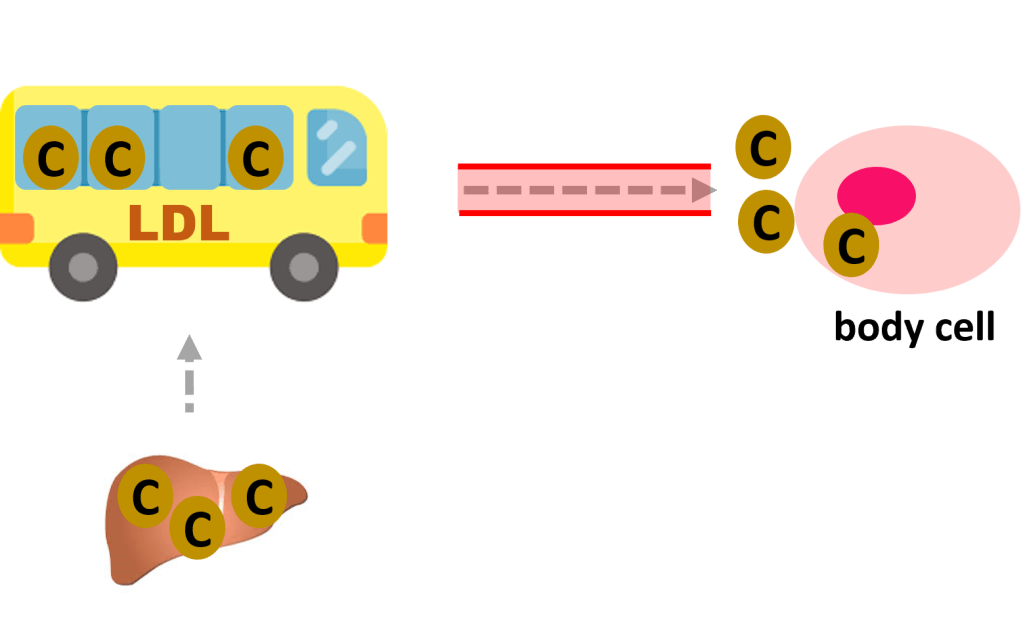
The bus doesn’t care if there is no more space at the destination stop, namely the body cells. It will continue to be transported even if the cells can no longer absorb cholesterol. And if the bus cannot unload any passengers anymore, in our case cholesterol, then the full bus simply remains in the blood vessels.
A permanently increased amount of LDL in the blood means that the LDL, i.e. the entire bus including passengers, accumulates in the inner walls of the arteries.
These deposits narrow the blood vessels and make them unstable. As a result, blood pressure rises so that a sufficient amount of blood can flow through. At some point, the blood vessels cannot withstand the high pressure and rupture. Just like a blocked garden hose.

If a blood vessel ruptures, the body tries to stop the wound and „sticks it together“ using blood platelets (thrombocytes).
Now the vicious circle starts all over again, as the blood vessels become even narrower. If a blood vessel becomes completely blocked, a thrombosis occurs.
A thrombosis of the coronary arteries (heart attack) or the cerebral arteries (stroke) has serious consequences.
So how can we prevent this? Quite simply, there is a second bus line, the HDL.
The HDL
HDL is the bus that collects excess cholesterol from the blood + tissues and transports it back to the liver.
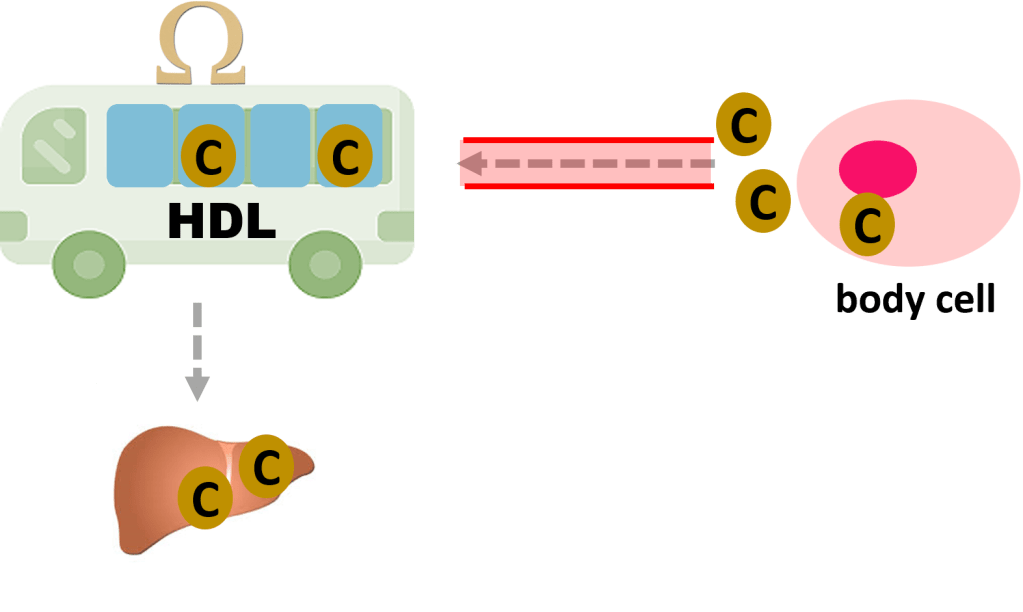
In the liver, the excess cholesterol is metabolized and finally excreted as waste in the urine.
We can now influence how many HDL buses are available through our lifestyle.
Nutrition
Your body needs fat to produce HDL. I know that sounds strange, because we always associate fat with something bad. But not all fats are the same.
Unsaturated fats such as omega-3 and omega-6 fatty acids are used to produce HDL, among other things. Without these fats, there is no HDL.

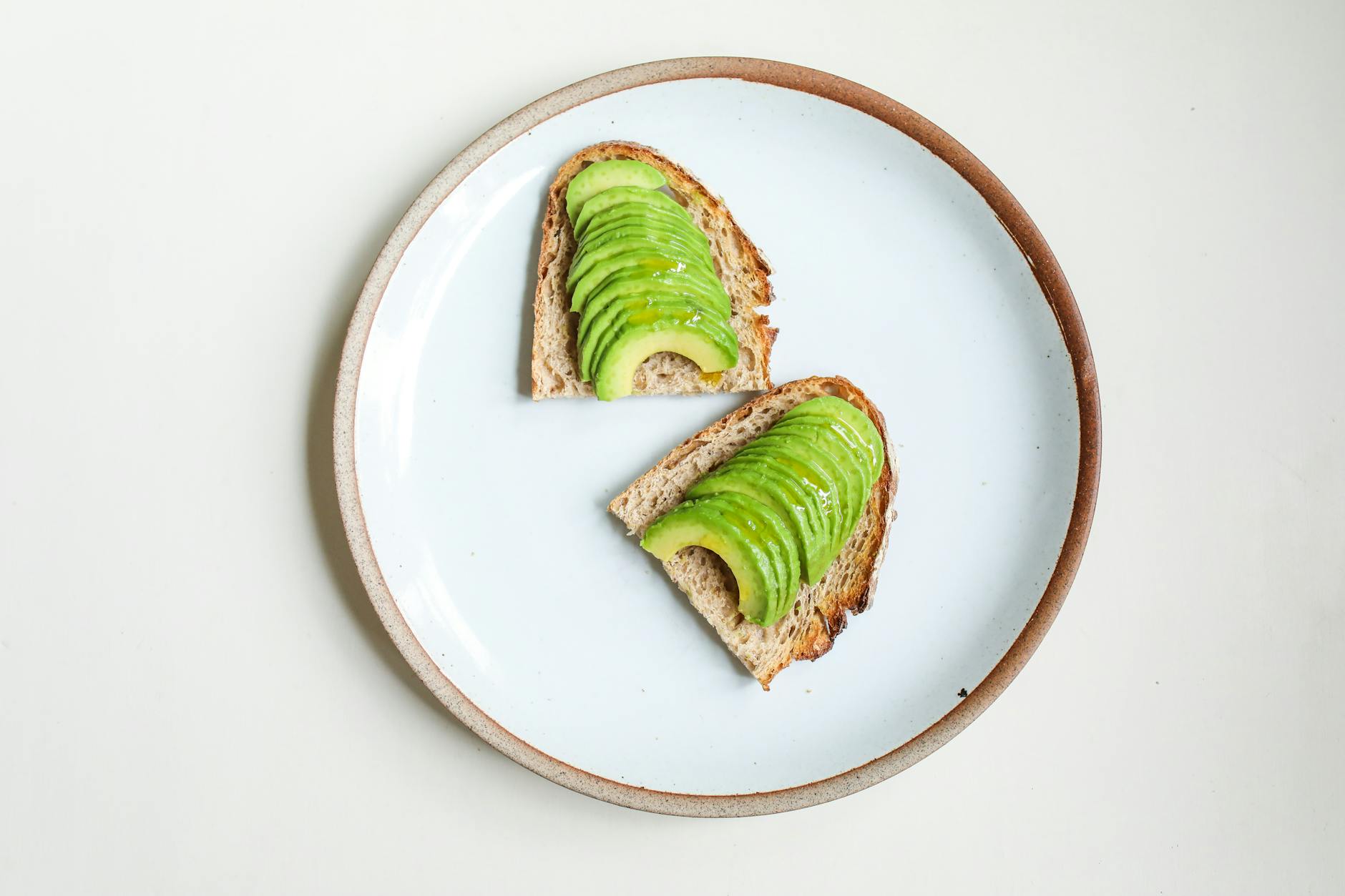
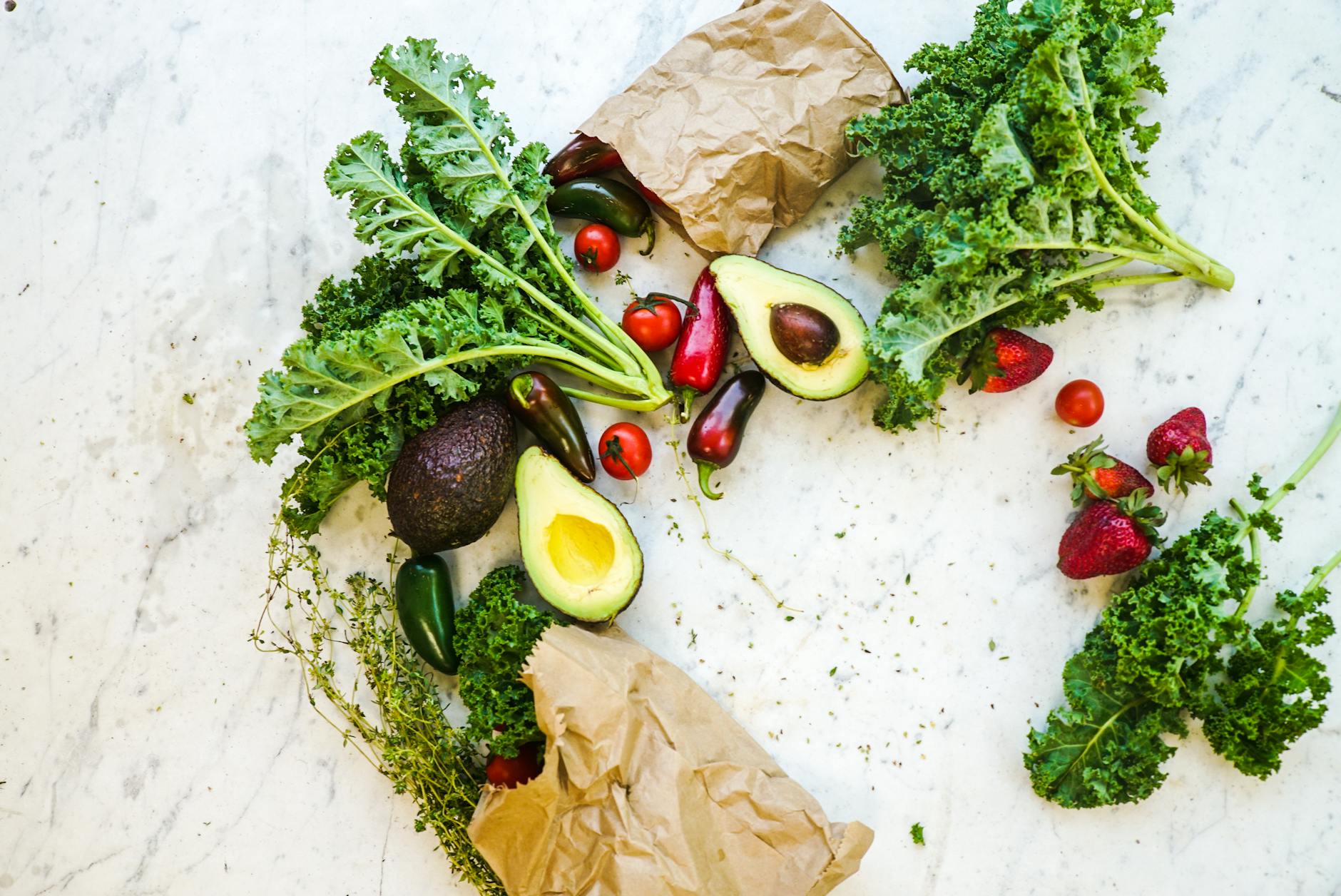


So if you consume a lot of omega-3 and omega-6 fats in your diet, your body will produce enough HDL. HDL absorbs excess cholesterol from the body so that the effect of excess LDL is neutralized.
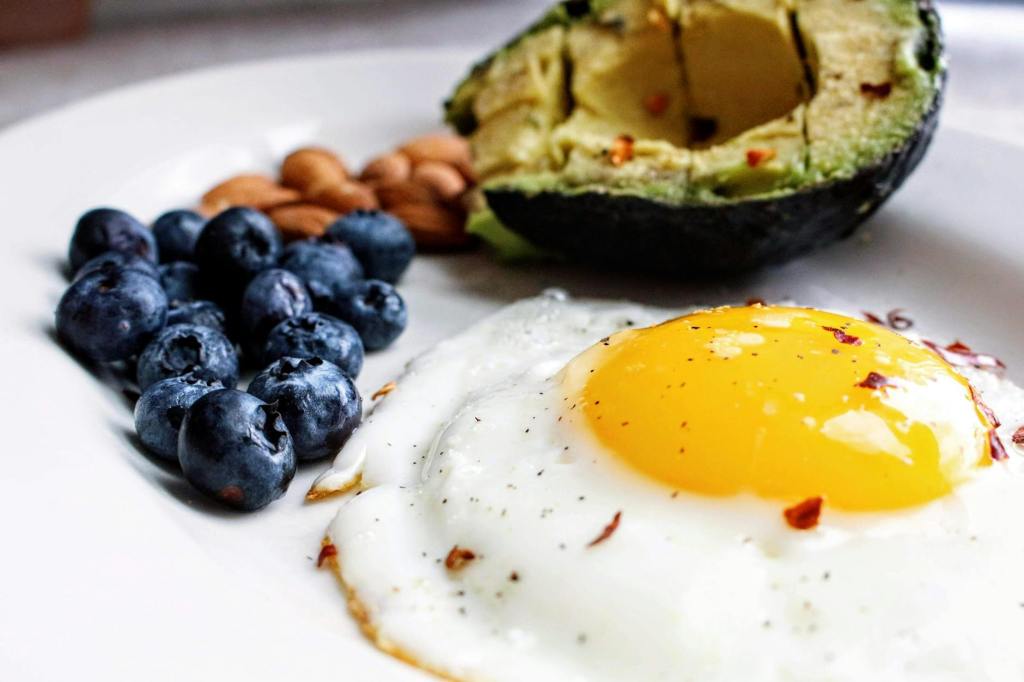
Now you can have a breakfast egg (which is high in cholesterol) every day. You only need to combine it with healthy fats, such as avocado, walnuts, salmon, etc.
I have created a more detailed article on this here.
Physical activity
Sport significantly stimulates the production of HDL.
Stress
The influence of stress mainly affects the „bad cholesterol“, i.e. LDL.
Studies have shown that a body under stress produces more LDL, which means that more cholesterol is transported.
However, as the body’s cells only reabsorb a certain amount of cholesterol, a higher surplus remains in the blood.

You may therefore have a high cholesterol level even though you exercise a lot and eat a healthy diet.
Reduce your stress levels to lower your cholesterol.
 The honest self-care
Hinterlasse einen Kommentar